


A Borrowed Moon is a solar eclipse photography in Miami session through clouds and light. This series began as an attempt to document a rare natural phenomenon. What emerged was something closer to fine art.
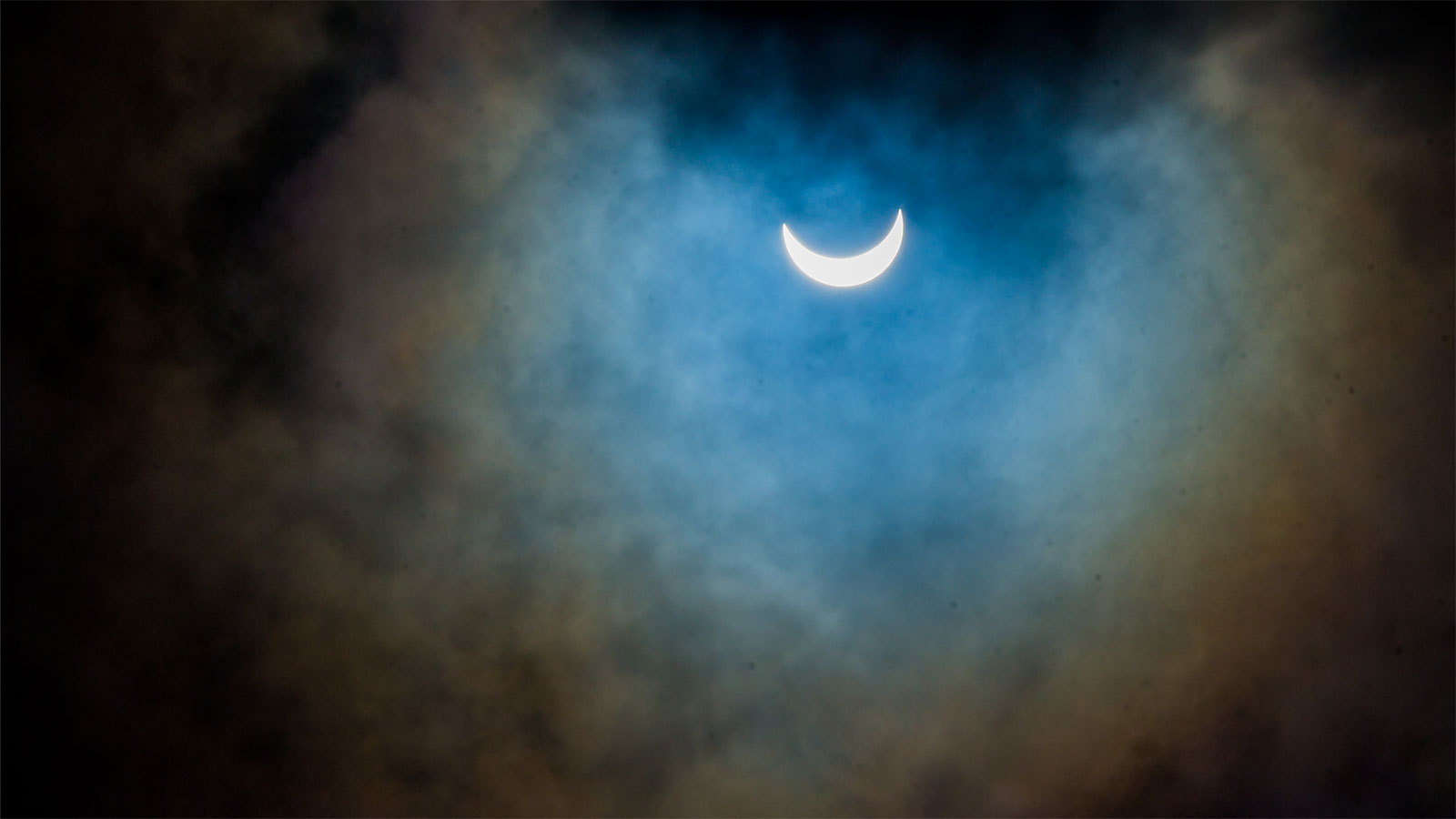
At first glance, the photograph appears to show a crescent moon emerging through a turbulent night sky. But it is not the moon. It is the sun in the middle of the day, partially concealed during a solar eclipse above Miami. For a brief moment, clouds, distance and exposure transformed a familiar source of light into something mysterious—something almost lunar.
When the Clouds Became a Filter
Miami was fortunate to be positioned within the right geographical coordinates to experience the eclipse. The conditions, however, were far from what a photographer might normally request. The sky was heavily clouded.
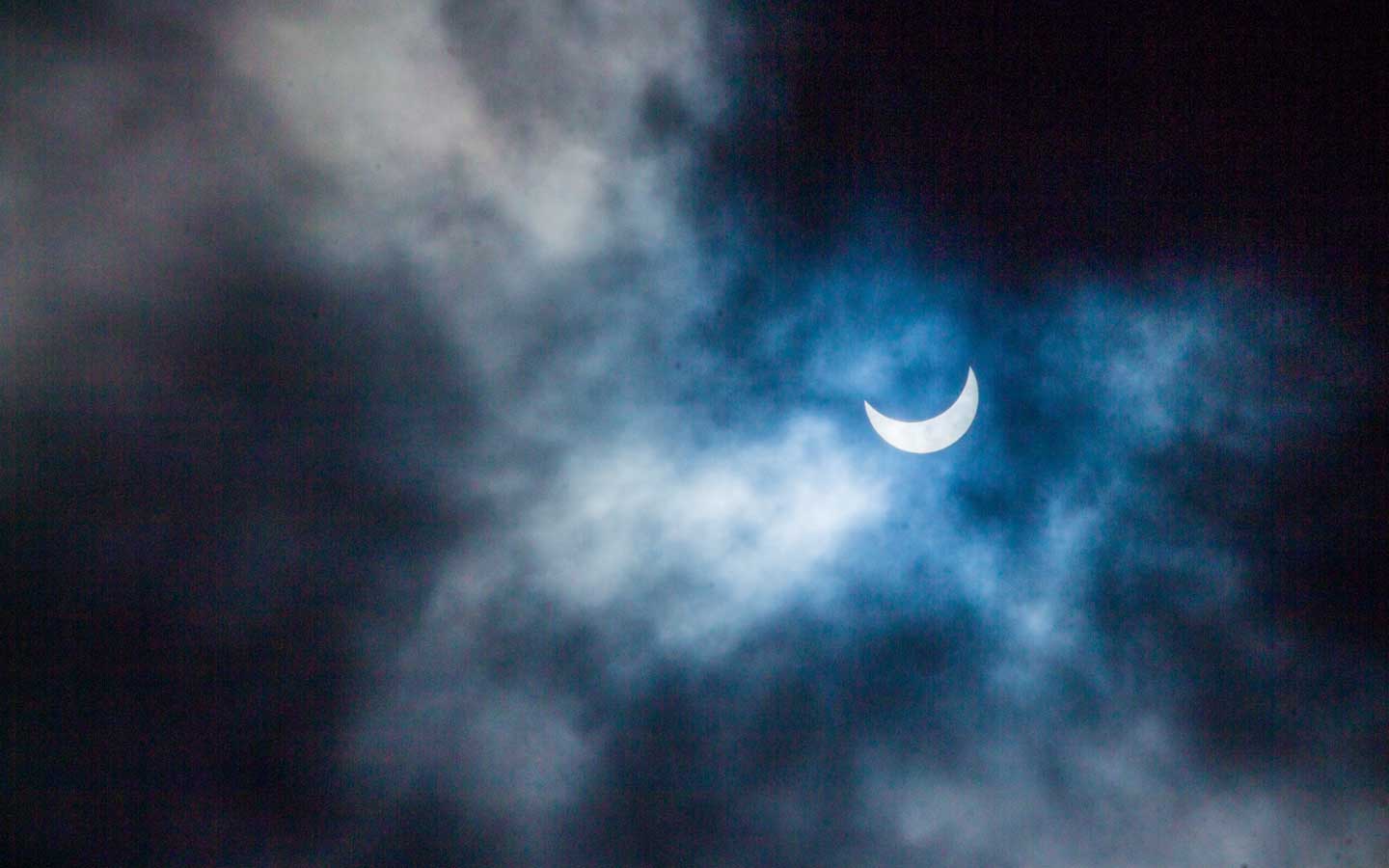
Clouds are often viewed as an obstacle when photographing an eclipse. They interrupt visibility, soften detail and can completely conceal the event. On this particular day, they became an essential part of the image. The moving cloud cover reduced and diffused the sun’s visual intensity just enough for fleeting glimpses of the crescent to appear. Layers of gray, blue, black and muted gold formed around it, creating an atmosphere that could never have been planned or recreated precisely.
The clouds were not simply passing in front of the subject. They became part of the composition. What might have been a straightforward astronomical photograph became an image about concealment and revelation. The sun appeared, disappeared and returned again, each time surrounded by a different formation of light and vapor.
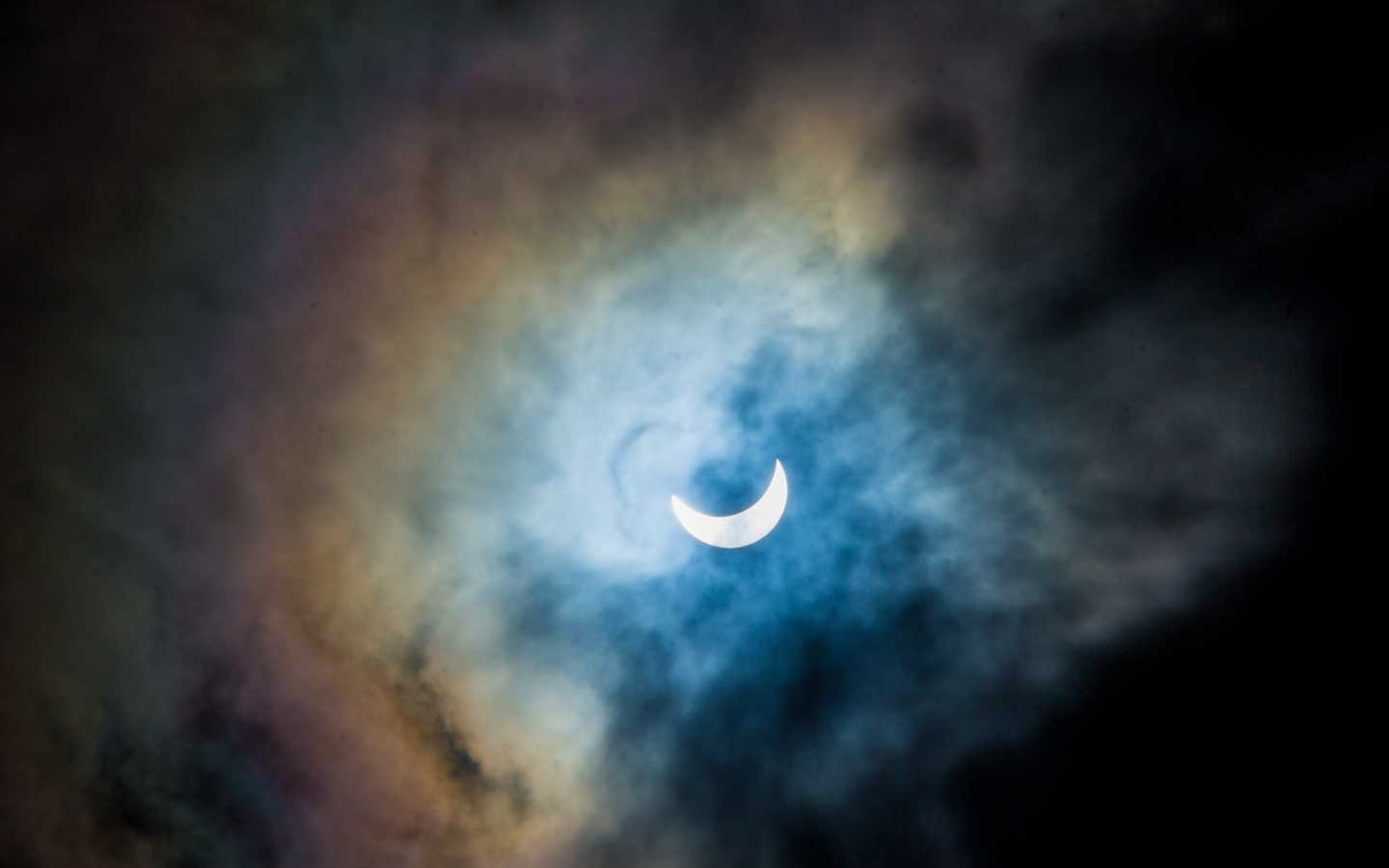
I photographed the eclipse with a 200mm lens, allowing me to isolate the crescent while retaining enough of the surrounding clouds to create a sense of scale and movement.
I no longer have the original exposure information, but I believe the photograph was made at approximately f/16 at 1/2000 of a second at 200 ISO. Those settings would have helped manage the extraordinary brightness of the sun while preserving definition and texture within the clouds. The exact settings are less important to me now than the visual result. Photography is technical, but the settings are ultimately there to serve the image. In this case, the camera recorded something that the eye could experience only briefly: the sun borrowing the visual identity of the moon.
A Note About Solar-Eclipse Safety
It is never safe to look directly at the sun without proper certified solar protection. Cloud cover may reduce the visible brightness temporarily, but clouds are not reliable eye protection. I avoided looking through the camera’s optical viewfinder. Instead, I used the fold-out screen on the back of the camera to frame and compose the image, keeping my eye away from the direct optical path of the sun. Photographers should still use an appropriate solar filter designed for the camera and lens. A rear screen may help with composition, but it does not replace proper solar-safety equipment or certified eclipse glasses for direct viewing. No photograph is worth risking permanent damage to your eyesight or equipment.
From Natural Phenomenon to Fine Art
The image began as a record of an event occurring above Miami. Once printed at a larger scale, however, it became something else.
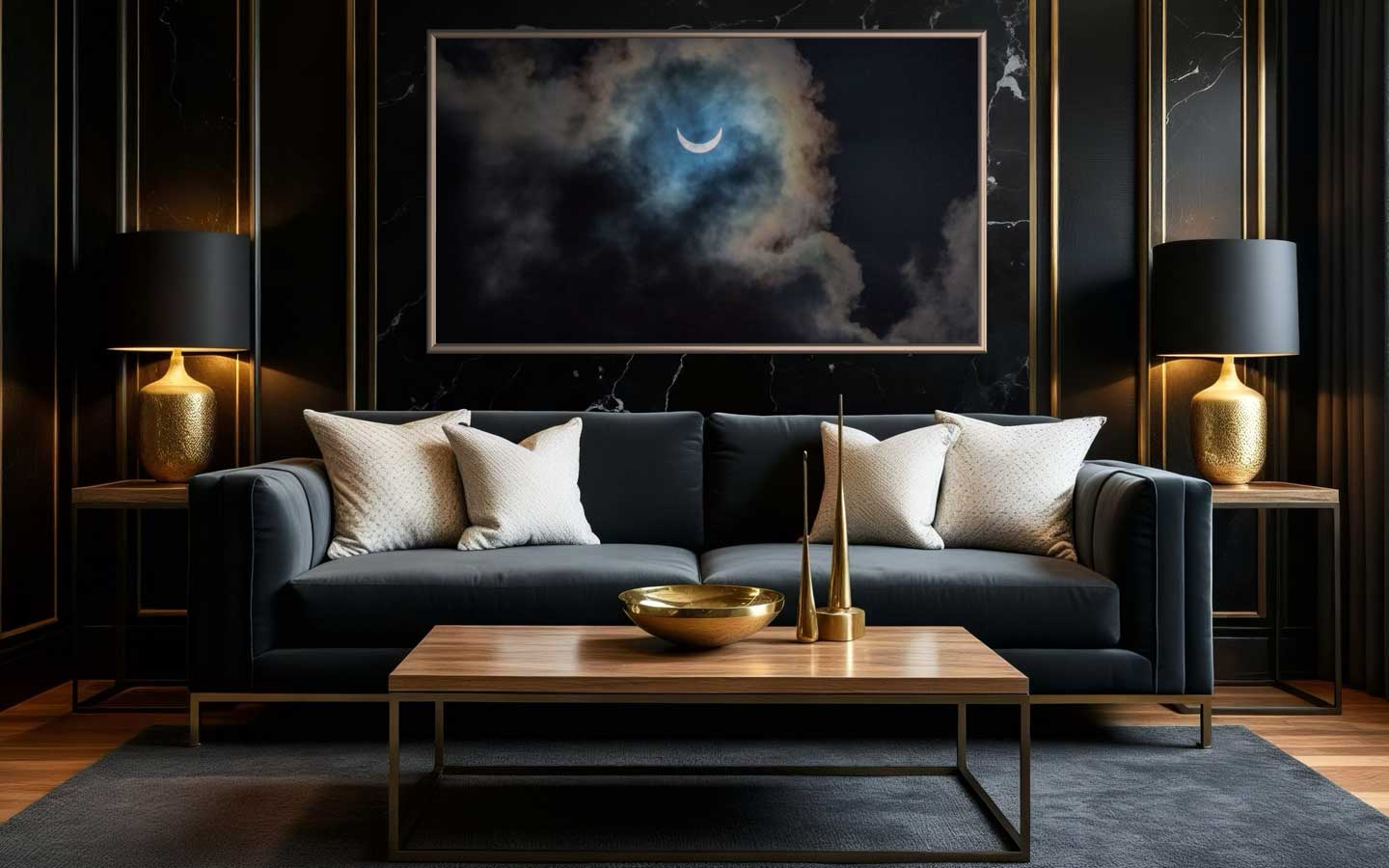
Installed as a statement print in a private home, the photograph no longer functioned primarily as documentation. It became an atmospheric window, a quiet interruption within the architecture of the room. Against dark walls, warm metallic details and controlled interior lighting, the white crescent seems to float within a field of smoke and color. The image creates the illusion of looking beyond the room and into another world.
This is where photography often crosses into fine art. The subject may begin as something recognizable: a face, a landscape, a building or a solar eclipse. But through framing, timing, scale and interpretation, the photograph can move beyond a literal description of what occurred. It begins to create its own emotional reality.
There is something poetic about the sun appearing as its opposite. The source of daylight became a slender white crescent surrounded by darkness. The middle of the day appeared to become night. A scientific event became an abstract meditation on light, shadow and transformation.
Nature supplied the eclipse. Miami supplied the coordinates. The clouds supplied the treatment. And for a few seconds, the sun became a borrowed moon.
Work with David – If you’re a creative director, a marketing lead, a brand builder, an interior designer or a collector looking for work with authorship, consider this your invitation to begin the conversation. For commissioned work, contact or send a message to david@siqueiros.com
® David Siqueiros . All Rights Reserved. No reproduction rights granted or implied.


