


Model suitability for photography has very little to do with the fantasy social media sells every day, yet that fantasy has strongly influenced how people now think about photography. Spend a few minutes scrolling and you will see an endless parade of faces presenting themselves as models.
The assumption seems obvious: if you are beautiful and comfortable in front of a phone, you must be model material. From where I stand behind a camera, that assumption is mostly wrong.
I look for a height of 5’10”–6’0” (175–183 cm) for women and 5’11″–6’3″ (180–190 cm) for men, with lean, toned, or “straight” body types. Key measurements (bust-waist-hips) are usually around 34-24-34 inches for women and a 37-44 inch chest for men.
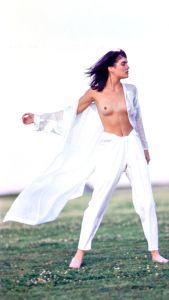
Beauty and suitability are not the same thing.
The camera is not a mirror. It exaggerates angles, compresses space, and reacts very specifically to posture, bone structure, and movement. Someone who is striking in person can fall completely flat in a photograph. And occasionally the opposite happens, someone who might barely register in a room becomes magnetic the moment the lens comes up.
That difference is suitability.
In professional photography the standard is simple: does the person translate through the camera?
Designers build clothes to work on very specific proportions. Photographers light those bodies in ways that amplify structure and movement. When those pieces line up, the photograph works. When they don’t, it doesn’t matter how beautiful someone is. But proportions alone don’t make a great model.
When I look at a potential model, I’m looking at height, bust, hips, dress size, shoe size, the proportions that determine whether the subject will work in the frame. Eye color and hair might catch my attention later, but structual suitability starts long before that.
The best models bring skill.
They understand light. They know instinctively how it lands on their face and how the smallest adjustment can change the photograph. They understand angles, posture, and movement. They know how to create variations in expression and gesture without being told every step of the way.
In other words, they know how to work.
One of the best models I ever photographed once explained it in a way I’ve never forgotten. When she stepped in front of the camera she tried to “give good sex to the camera.”
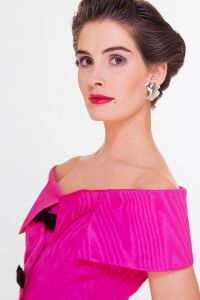
She didn’t mean it literally. She meant energy. Presence. Commitment. The willingness to engage the lens completely. The camera recognizes that instantly.
When a model understands this, very little direction is needed. Often the moment I say “OK, I’m shooting,” the collaboration begins and the rhythm of the set takes care of itself.
That kind of awareness is rare.
Social media has made beauty feel common. It has also convinced a lot of people that modeling is simply a matter of confidence and a good phone camera. But photography, real photography, has always worked by a different standard. In professional editorial photography, suitability matters more than beauty. From my point of view behind the camera, the distinction is simple.
Beautiful is common. Suitable is rare.
Work with David
If you’re a creative director, a marketing lead, a brand builder, an interior designer or a collector looking for work with authorship, consider this your invitation to begin the conversation.
For commissioned work, view services. To explore curated bodies of work, visit collections. For direct inquiries, contact or send a message to david@siqueiros.com


